Nicco Pintac
PD-03Concept

Urban Mobility E‑trike

E-trike and route system for Mandaluyong

Mandaluyong's e-trikes still run on rules borrowed from the gas tricycle. This project redesigns the vehicle and the way its routes operate.

Discipline
Product design
Made with
Vehicle and route system
Stage
Concept
Designer
Nicco Pintac, Manila
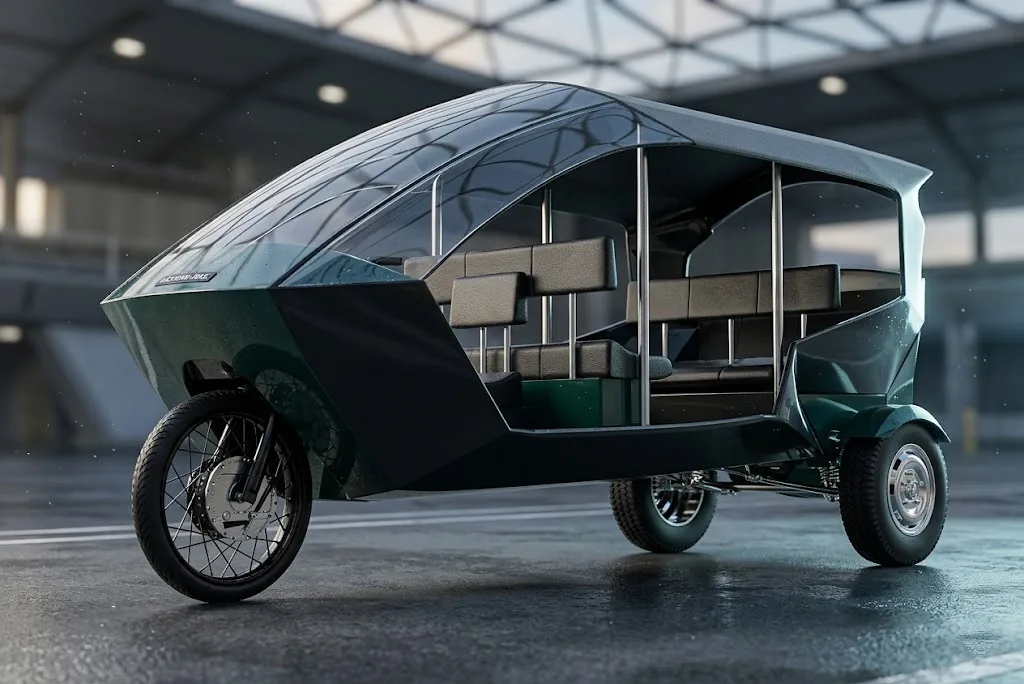
Dark green faceted e-trike with a glass canopy in a parking structure

The brief was to design and improve the existing e-trikes in one specific area, Mandaluyong City, and to improve how that kind of public transport works there.

That meant working on two levels at once: eight fixes to how the service runs, from fares to battery care, and a new vehicle built around the passengers, the driver and the battery range.

problems found on the routes
8
proposed base fare
₱6
longest wait at a terminal
15 min
of even service
7 days
01

Fixing the route as well as the ride

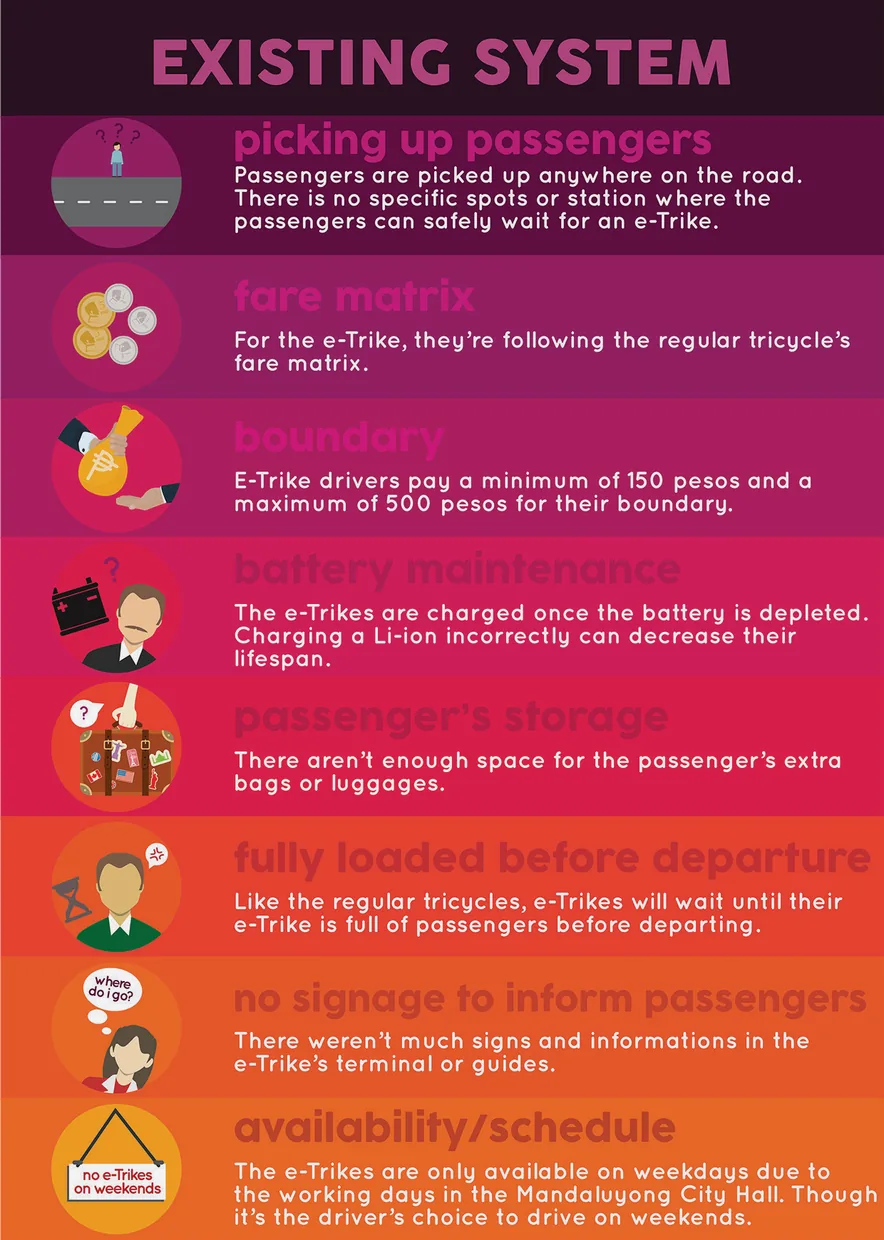
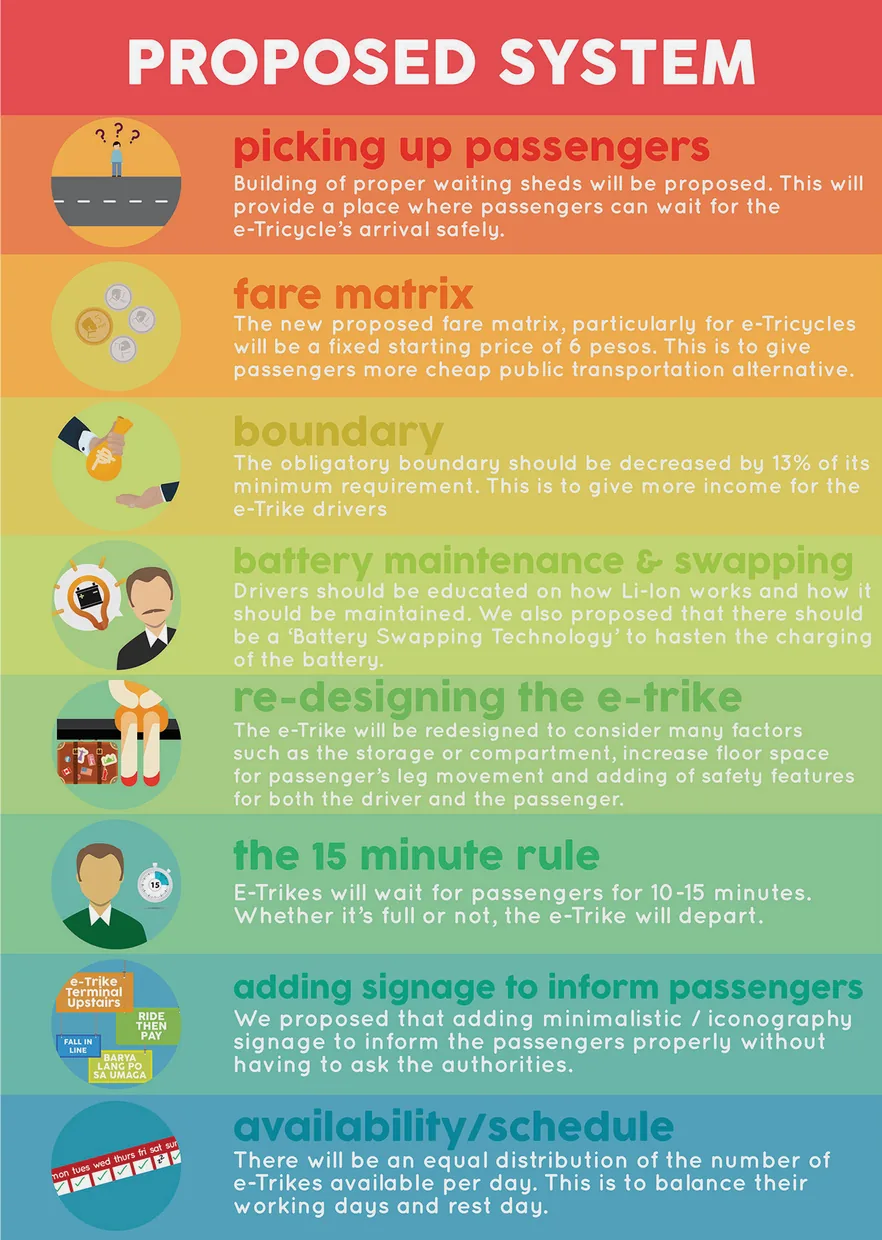
Research on the Mandaluyong routes turned up eight problems in how the service runs, from where passengers wait and what they pay, to how drivers charge their batteries. Each one gets a specific fix.
IssueExisting systemProposed systemKey change
Picking up passengers
ExistingPassengers flag e-trikes anywhere on the road, with no set stops where they can wait safely.
ProposedBuild proper waiting sheds so passengers have a safe, covered place to wait for the next e-trike.
ShedsSafe stops
Fare
ExistingE-trikes borrow the regular tricycle fare matrix.
ProposedA dedicated e-trike fare matrix with a fixed ₱6 starting fare, making it a cheaper way to get around.
₱6Base fare
Boundary
ExistingDrivers pay a daily boundary of ₱150 to ₱500 to operate.
ProposedCut the minimum boundary by 13% so drivers keep more of what they earn.
−13%Min. boundary
Battery care
ExistingBatteries are charged only once they run flat, and poor Li-ion charging habits shorten their life.
ProposedTrain drivers in Li-ion care and introduce battery swapping to cut downtime.
SwapBattery system
Passenger space
ExistingThere is no room for passengers' bags or luggage.
ProposedRedesign the e-trike itself, with a storage compartment, more legroom and safety features for driver and passengers.
NewVehicle design
Departure
ExistingLike gas tricycles, e-trikes wait until every seat is full before leaving.
ProposedThe 15-minute rule: wait 10 to 15 minutes, then leave whether full or not.
15 minMax wait
Signage
ExistingTerminals have few signs or guides, so passengers have to ask around.
ProposedSimple, icon-based signage so passengers can find their way on their own.
IconsWayfinding
Availability
ExistingE-trikes mostly run on weekdays, following Mandaluyong City Hall's schedule. Weekends are up to each driver.
ProposedSpread the fleet evenly across all seven days to balance service with drivers' rest days.
7 daysEven coverage
Infographic of the existing e-trike system and its eight problems
Existing system
Infographic of the proposed e-trike system and its eight fixes
Proposed system
02

Sketching the vehicle

Ideation sketches covered the body and the cabin together: bench seating, a storage compartment that opens for passengers' bags, the wheels and the overall shell.
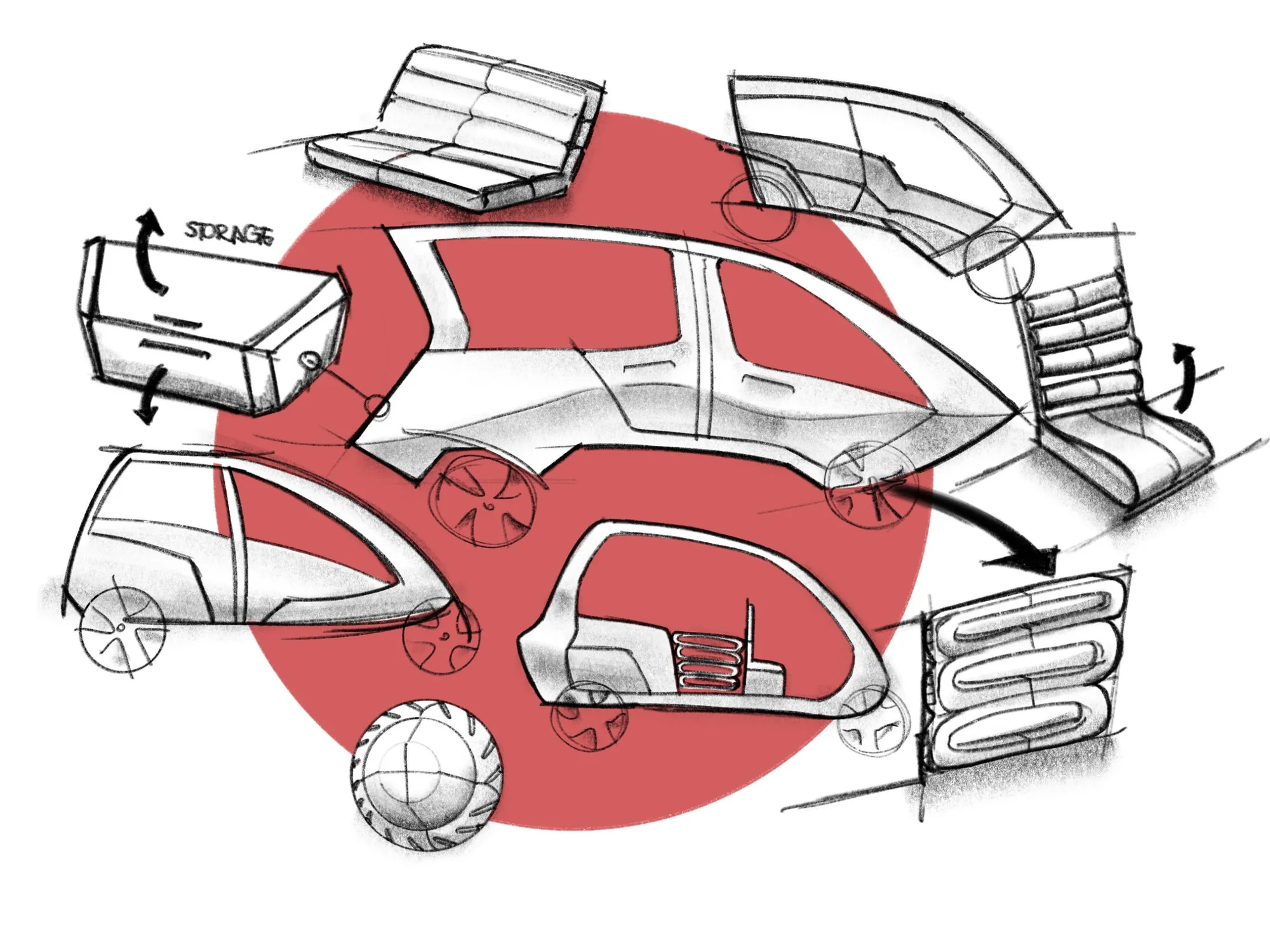
Ideation sketches of the e-trike body, seating and a storage compartment on a red circle
Ideation sketches
03

The vehicle

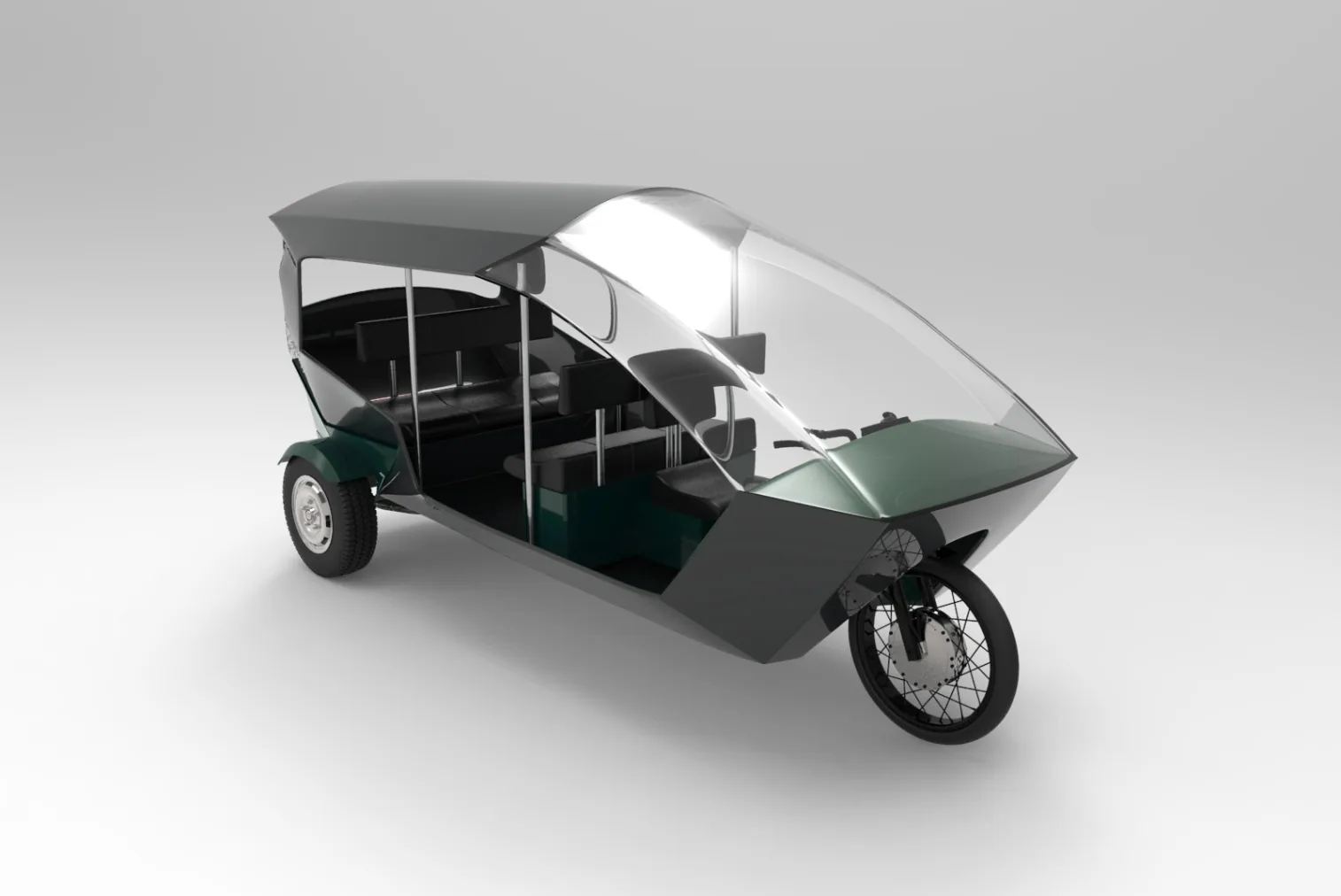
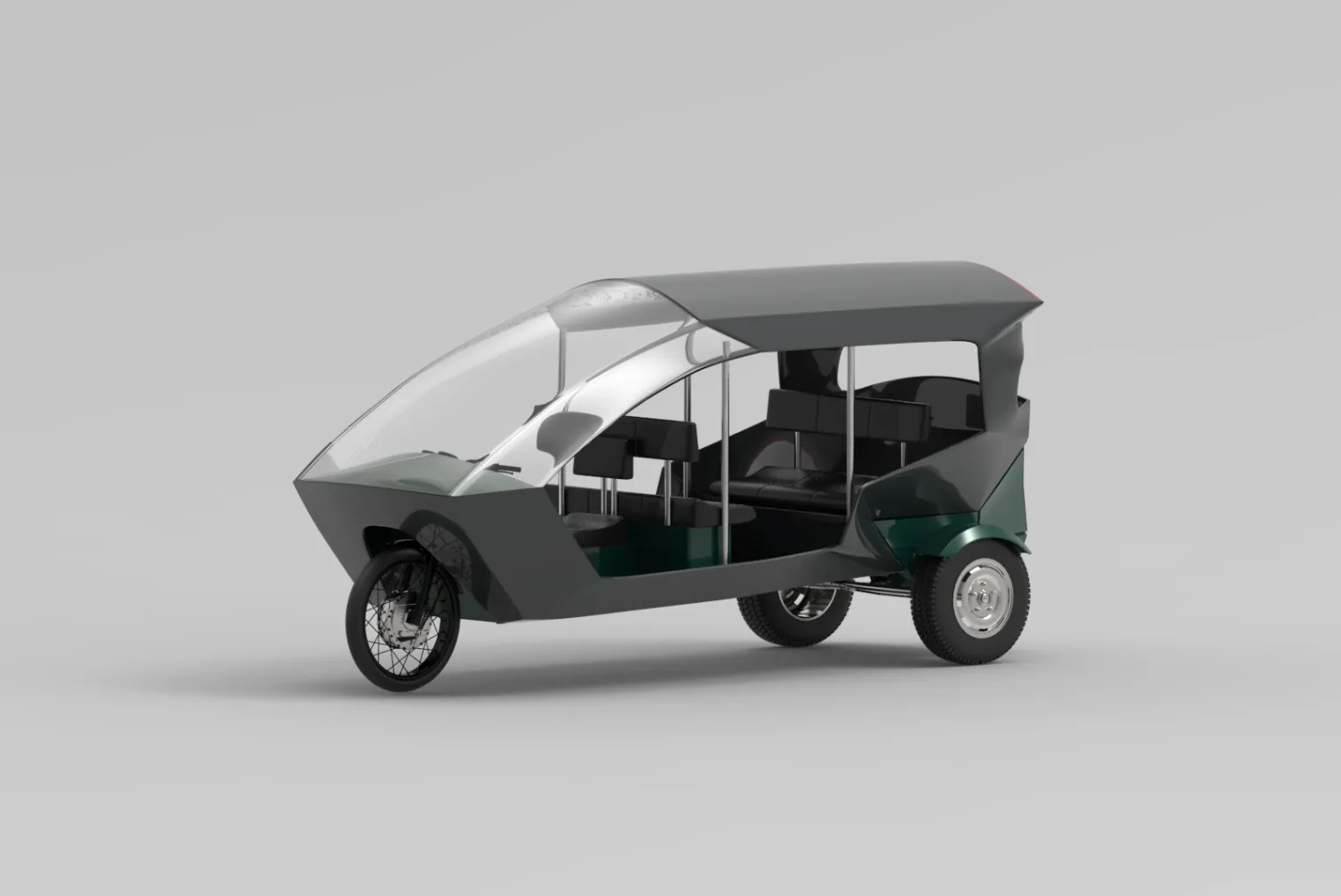
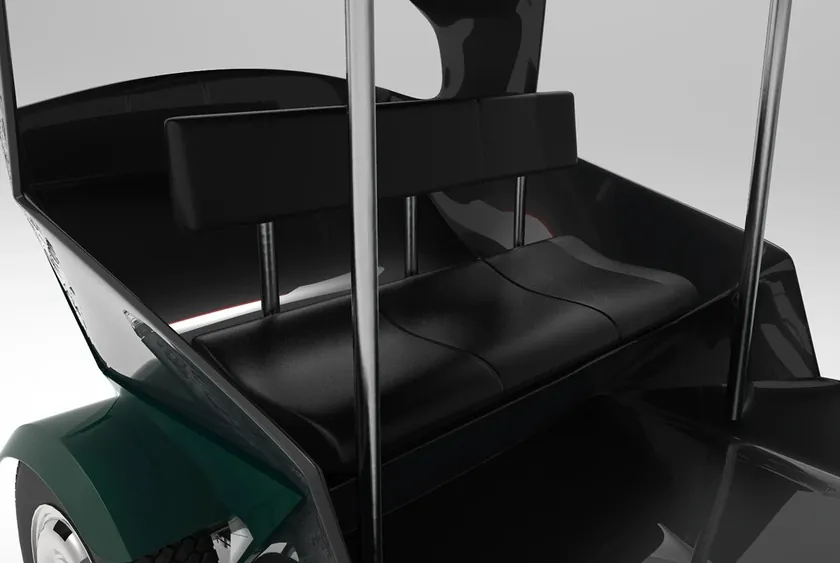
The cabin is planned around passengers, with room to move, secure handholds and proper storage. A wide, sweeping windshield opens up the driver's view of the road.

The faceted shell is shaped for low drag. Its sharp, geometric lines are functional rather than decoration: less drag means better efficiency and more battery range over a full day of trips.
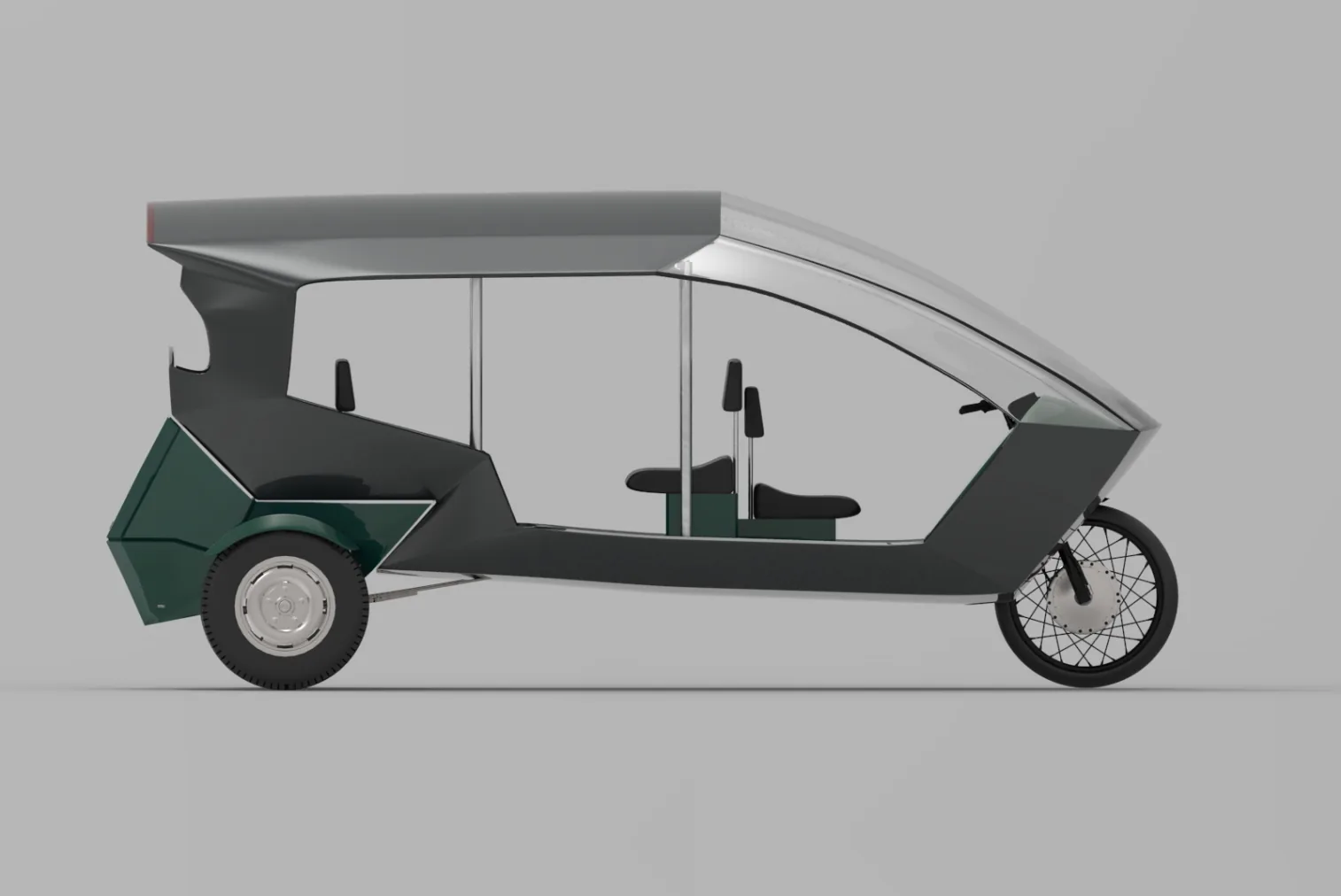
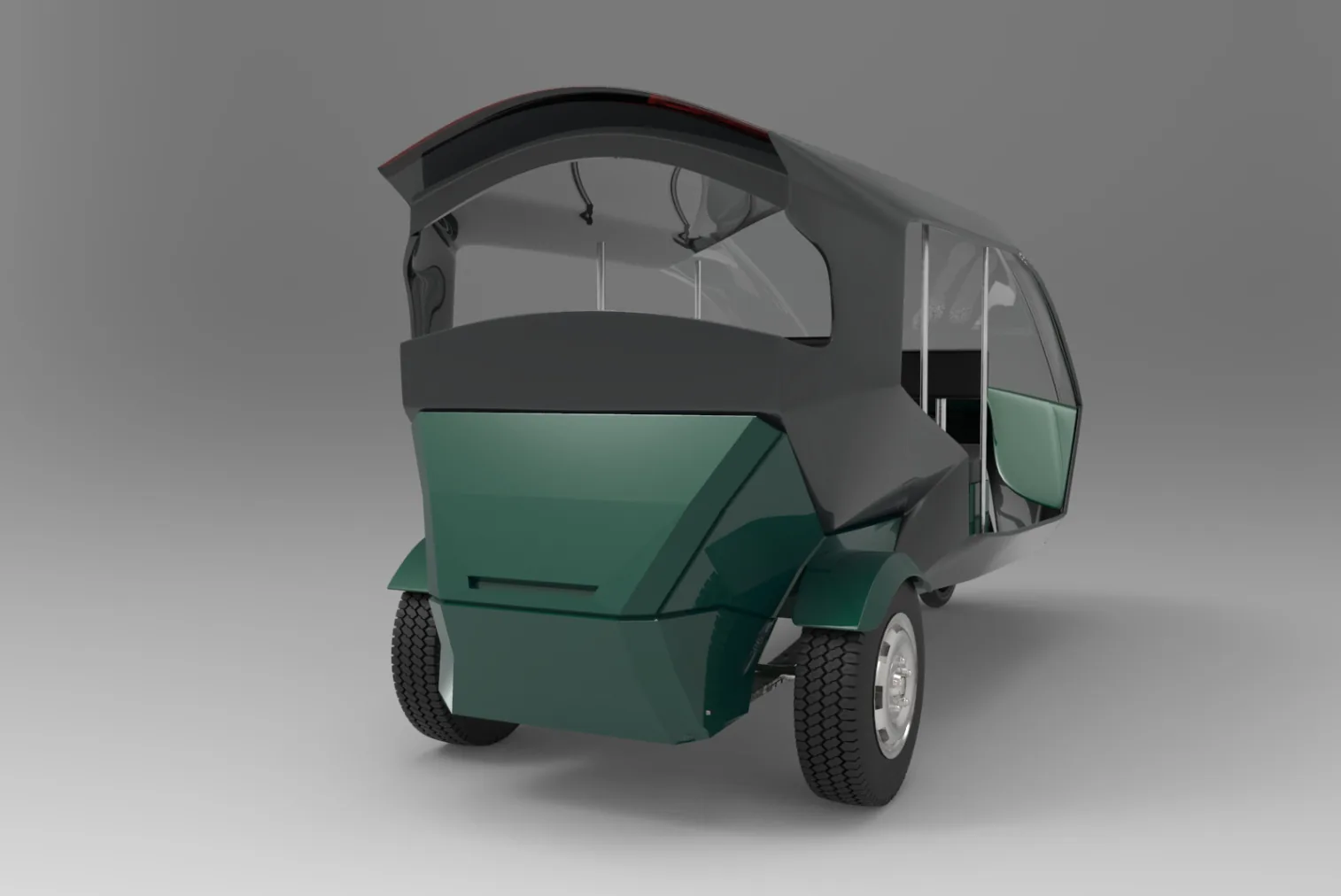
Side view render of the green e-trike
Side
Rear three-quarter render of the e-trike
Rear
Front three-quarter render of the e-trike on white
Front three-quarter
Low front three-quarter render of the e-trike
Low angle
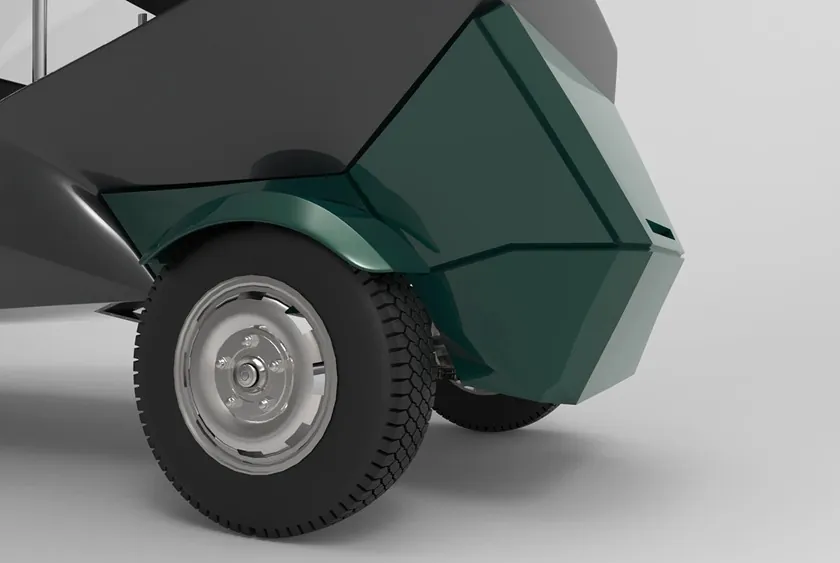
Render of the rear wheel housing
Rear housing
Render of the passenger cabin interior
Passenger cabin
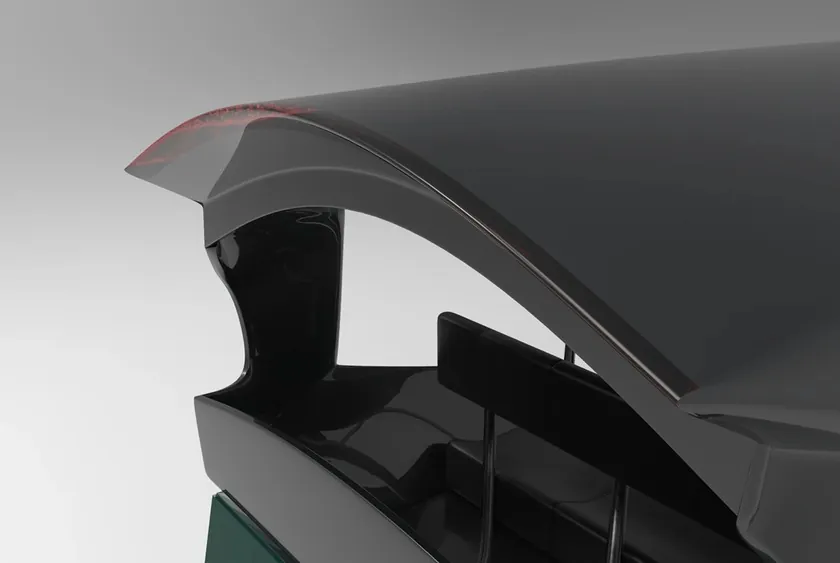
Render detail of the canopy edge
Canopy detail
Work together

Have a product, a shoe or a render in mind?

I'm Nicco Pintac, a Filipino industrial, product and footwear designer based in Manila. I'm open to freelance and full-time work, remotely or in the Philippines. Send a brief, a rough sketch or just a question.

01 / 01
100%