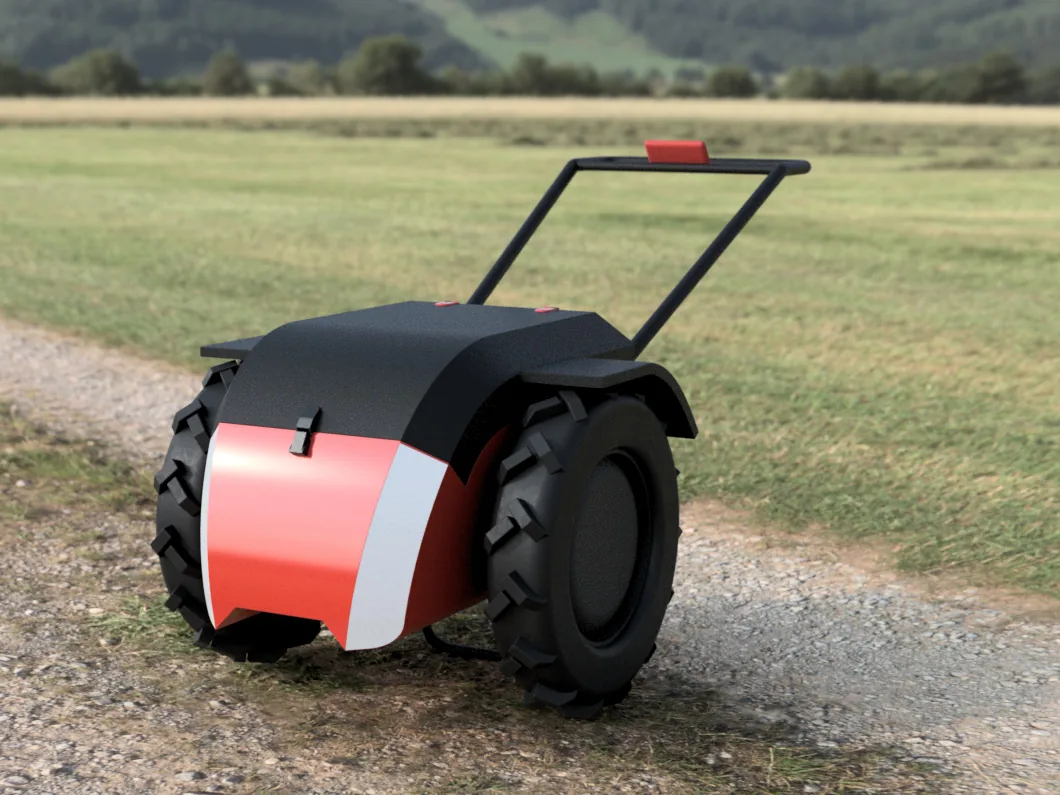
E-kuliglig reimagines it with a fully electric powertrain. Going electric removes the toxic exhaust and drastically reduces the mechanical fatigue of a long day behind the handles.
An enclosed chassis protects the operator and shields the internals from harsh weather and mud, which reduces maintenance and extends the machine's lifespan.
- electric motor, about 20 HP
- 15 kW
- lithium-ion batteries
- 2 × 96 V
- of continuous field work
- 8–10 h
- on the road per charge
- 90 km
Ideation
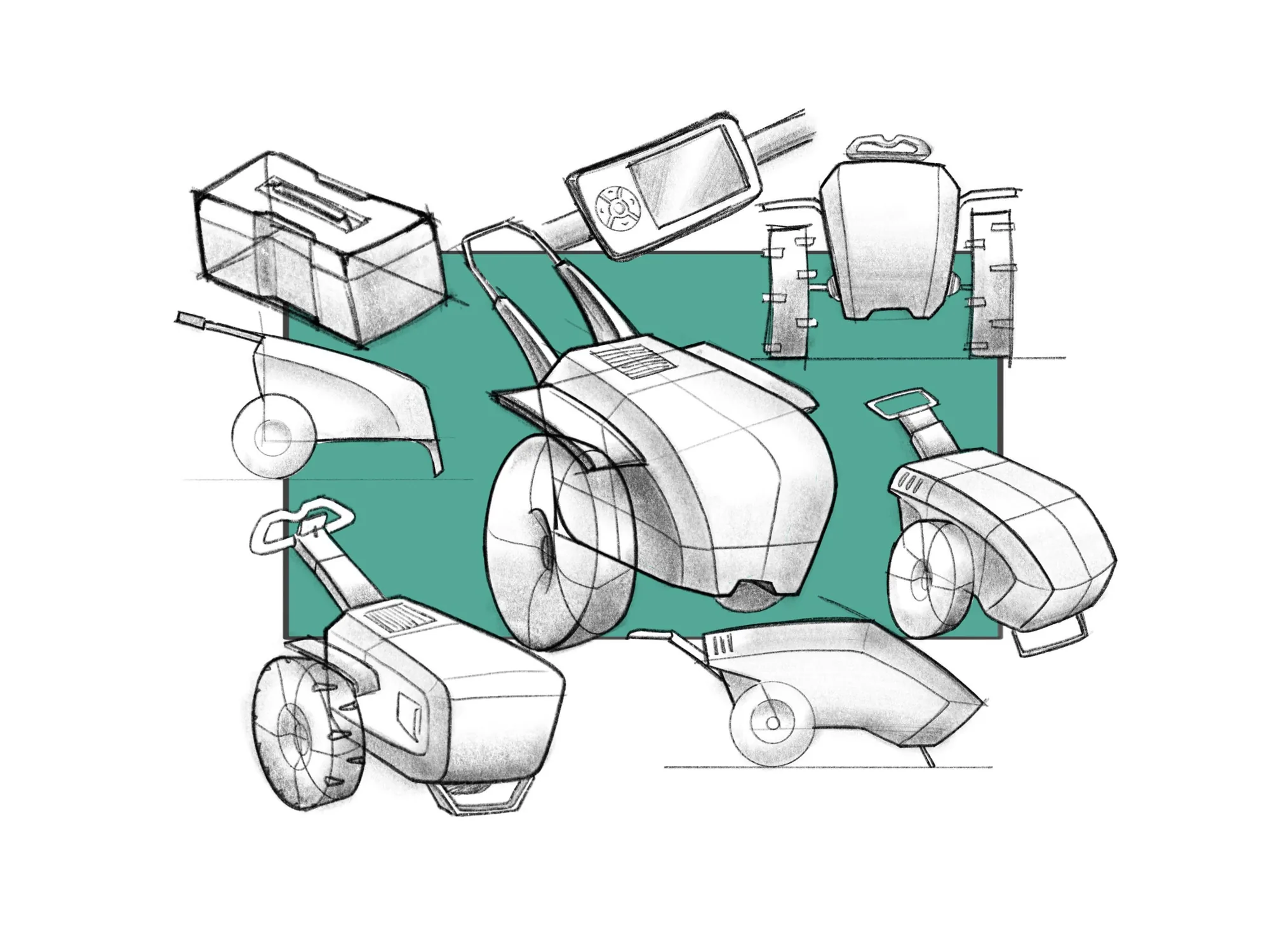
The project started under the working name El Traktor, with a reference board that pulled from off-road vehicles, motorcycles, appliances and sneakers.
Sketches explored the body shell, the wheels and wheel guards, the handlebars and a control display, looking for a form that reads as one sealed machine instead of an engine bolted to a frame.
The first build
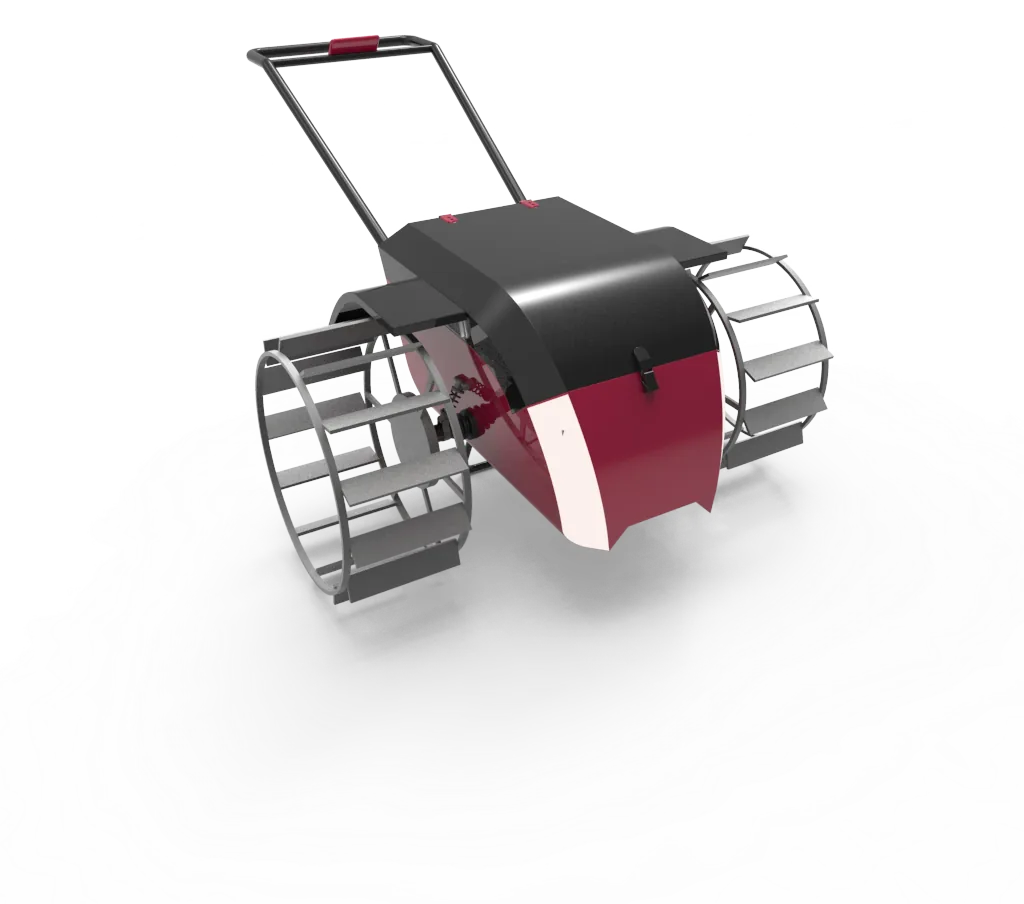
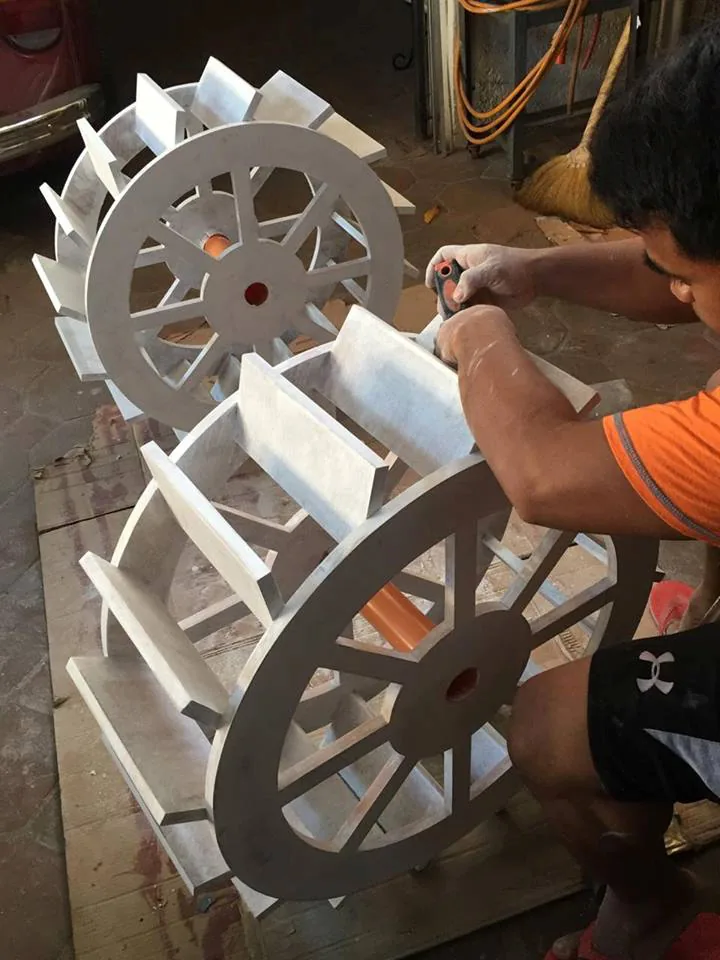
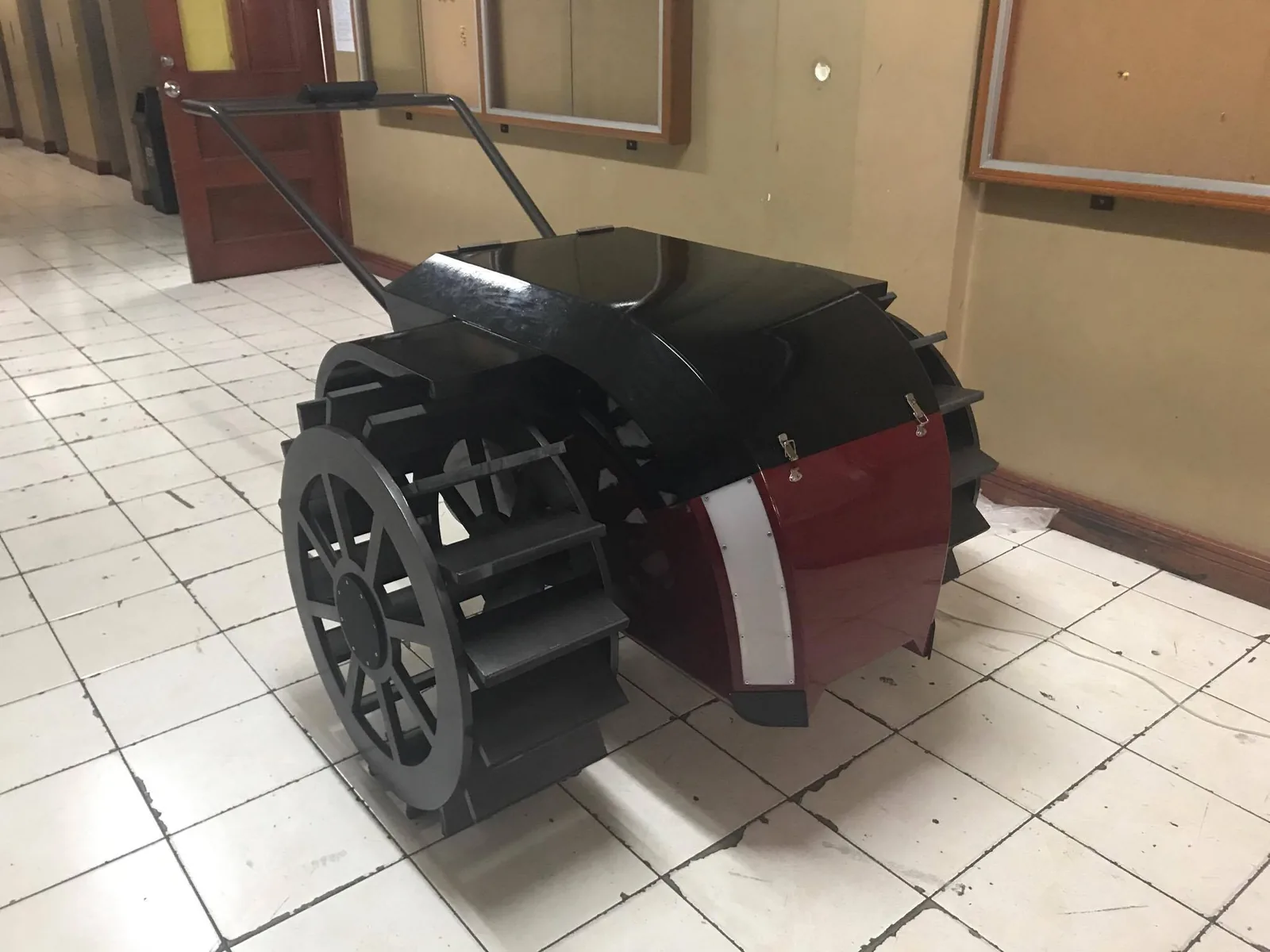
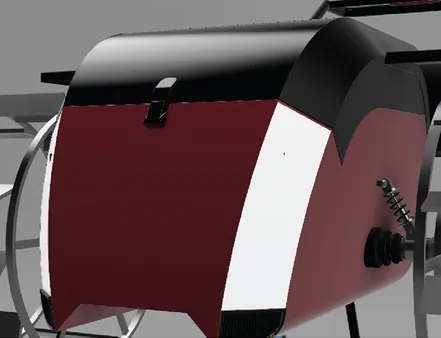
The first version rolled on open steel cage wheels, the kind that grip in flooded rice paddies, under a black and maroon shell with a looped handlebar.
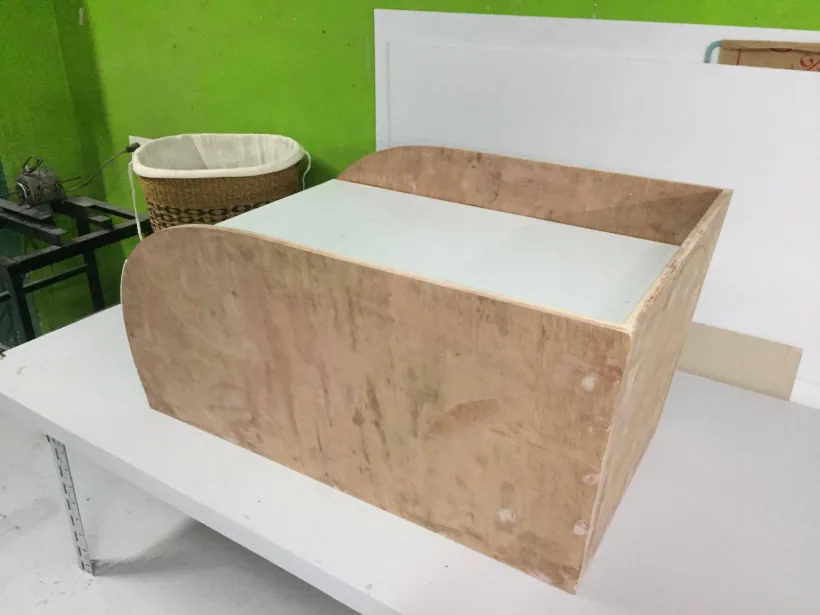
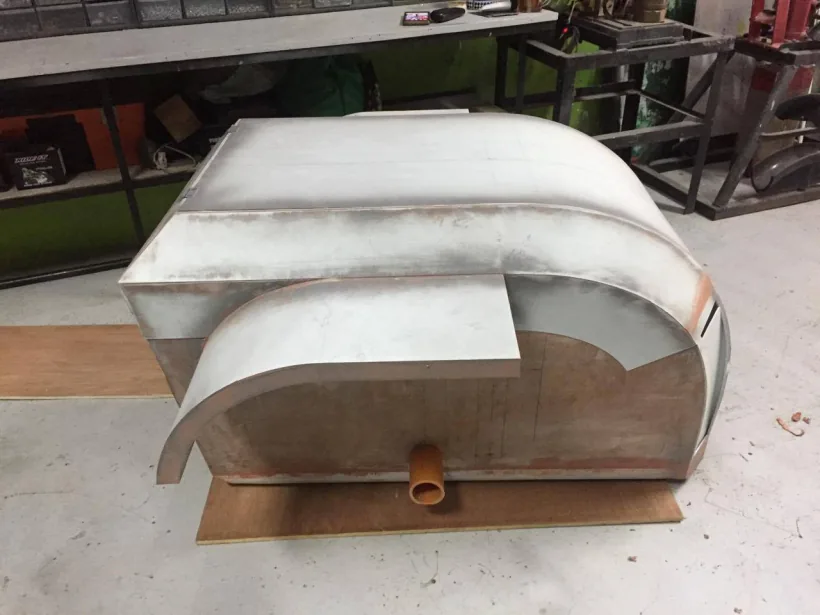
It was then built as a physical model: a wooden box frame, a body shell formed over it, and cage wheels cut and assembled by hand in the workshop.

Electric drive
Inside the sealed body, a 15 kW electric motor delivers the equivalent of 20 HP, enough to work dense, wet soil and pull heavy agricultural loads.
Two 96 V lithium-ion batteries run it for 8 to 10 hours of continuous field work, or up to 90 km of travel on the road. A controller sets the motor speed, and every control sits on a panel at the handlebars.
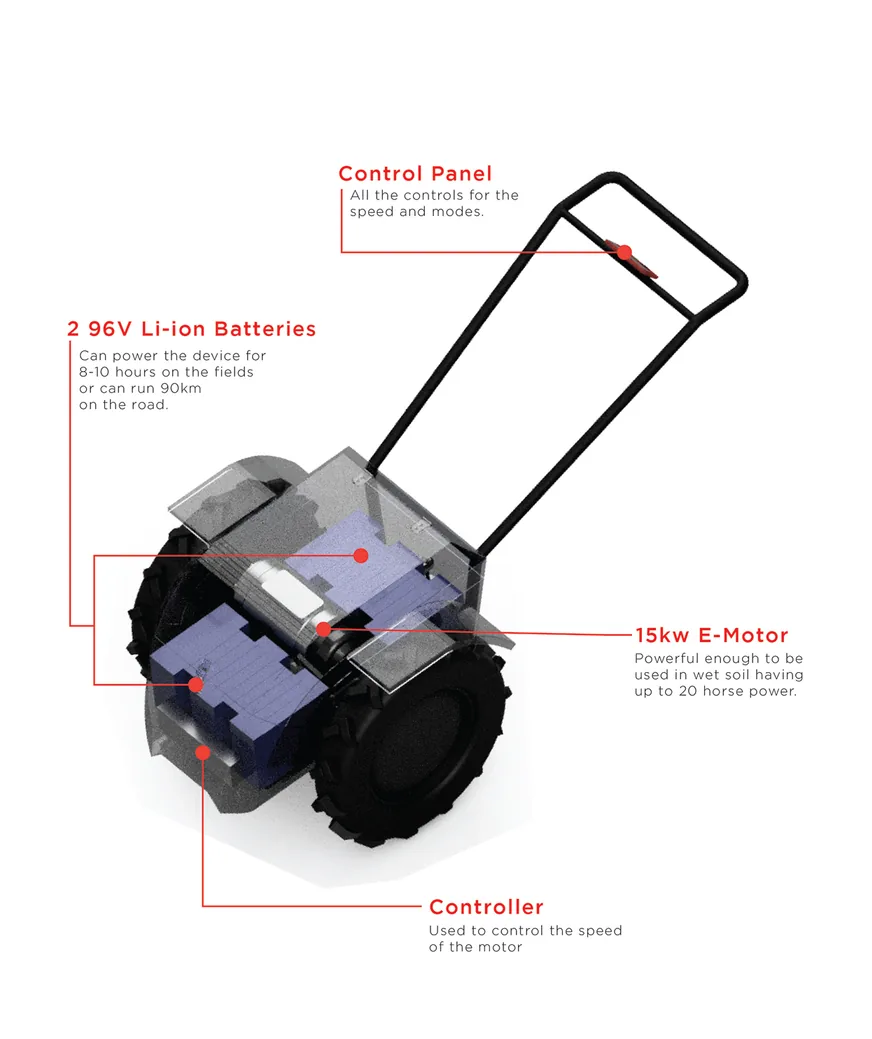
- Control panelOn the handlebars: speed and drive modes, without letting go of the grip.
- BatteriesTwo 96 V lithium-ion packs: 8–10 hours in the field or 90 km on the road.
- E-motor15 kW, about 20 HP. Powerful enough for wet soil.
- ControllerSets the speed of the motor.
Built for mud and rain
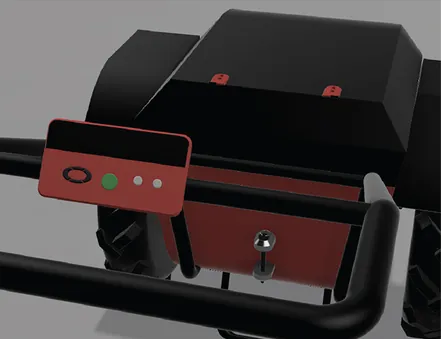
The enclosed chassis shields the drive from rain and mud and keeps the operator clear of moving parts. The control panel is weather-resistant and built into the handlebars, so speed and power change while both hands stay on the grips.
The rear hitch stays fully modular, so the tractor moves between standard plows, harrows and cultivators like the machines farmers already use.

Drawn to size
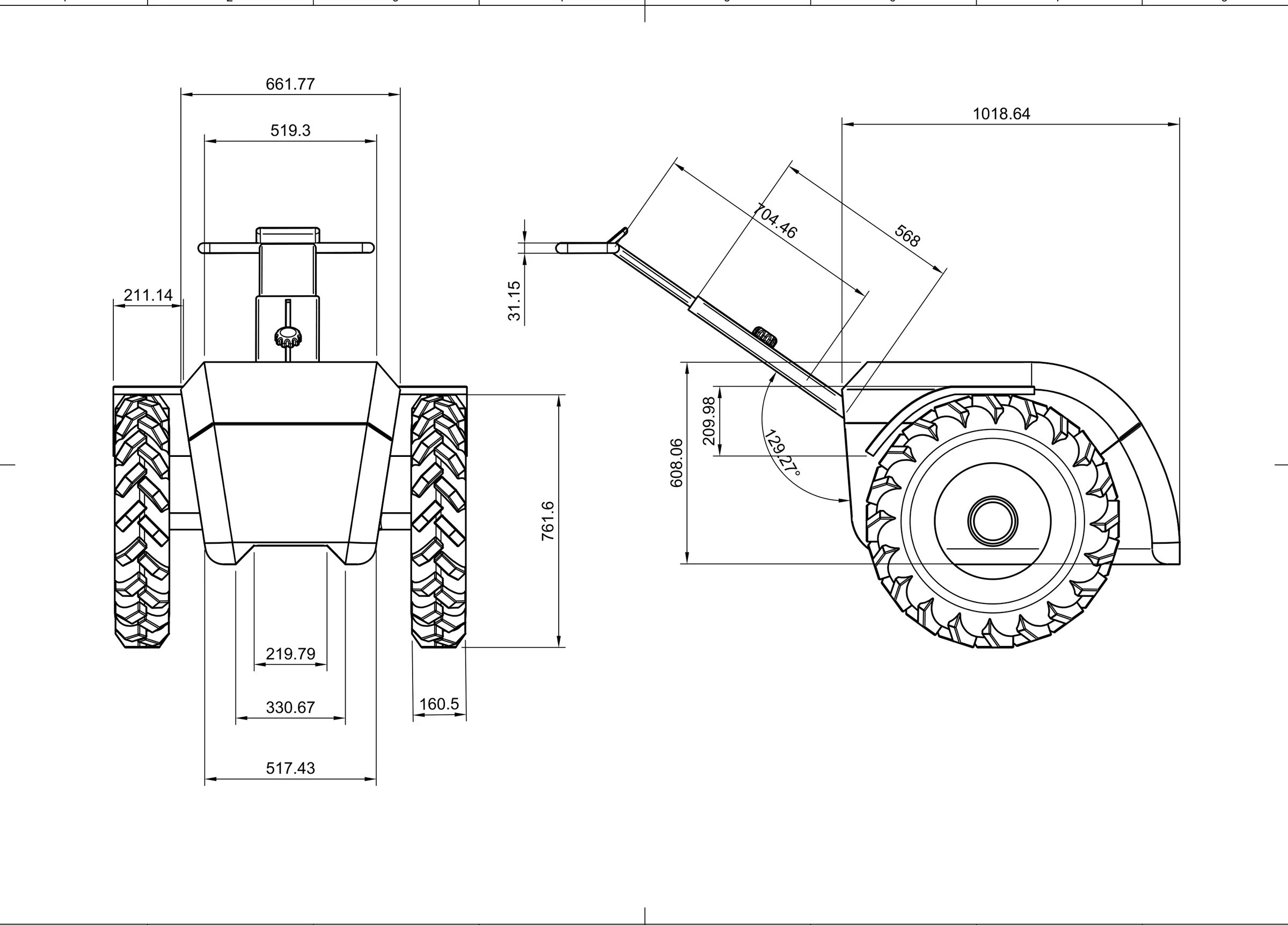
A dimensioned front and side drawing fixed the proportions of the rubber-tire version: track width, tire size, and the length and angle of the handle. In the field, it swaps the cage wheels for deep-lug tires.